
Why a bypass comes up at all
Behind most bypass recommendations stands the same underlying process: arteriosclerosis. Over years, the artery wall thickens and hardens, the vessel narrows, and eventually too little oxygen-rich blood reaches the leg. The consequences range from pain when walking to wounds on the lower leg or foot that will not heal – because the tissue that should rebuild is not receiving supplies.
Procedures that repair narrowed or blocked arteries are called revascularisation. A bypass is one of them – but only one. That is the first important point: the question is rarely “bypass yes or no?”, but “which route to better blood flow fits this patient?”
Three routes to better blood flow
- Catheter procedures (interventional): the narrowing is reached from inside the vessel via a puncture, widened with a balloon and, where needed, stabilised with a stent. Usually possible under sedation without general anaesthesia – a major advantage for patients with serious heart, lung or kidney conditions. Best suited to shorter narrowings and blockages.
- Open surgery: for long blockages, surgeons either clear the calcified inner layer of the artery (endarterectomy) or bridge the blocked segment with a bypass. With the right indication and an experienced team, open procedures tend to stay open longer than catheter solutions.
- Hybrid procedures: increasingly, both approaches are combined in one session – for example a bypass plus balloon dilation of a second narrowing.
What the choice of procedure really depends on
In his continuing-education article for physicians on this exact topic, Dr. Link names four patient-side factors that shape the decision:
- Is a suitable vein available? The body’s own vein is the preferred bypass material: it tends to stay open longer and resists infection better than synthetic grafts. The trade-off is a longer operation.
- Which other conditions are present? Heart, lung and kidney disease change the risk calculation.
- Is the patient fit for anaesthesia? If not, a catheter procedure under sedation may be the only realistic route.
- How extensive is the wound? The state of the tissue that needs saving co-determines how much blood flow must be restored, and where.
And there is a fifth factor that patients are rarely told about openly: the experience and repertoire of the treating centre. Not every hospital offers every procedure at the same level. A recommendation can be honest and still reflect what the local team does best – which is precisely why an independent view can be so valuable before a major, hard-to-reverse operation.
Like a long-haul journey: preparation decides
“Complex revascularisation procedures resemble a long-haul journey: given their scale, they should be well considered and very well prepared.”
Dr. med. Johannes Link, Dermatologie Praxis 2022Good preparation follows a staged diagnostic path: pressure measurement at the ankle (ABI), ultrasound of the vessels, and before any bypass an angiography that maps the arteries precisely. Just as important: checking the heart and lungs for fitness, and examining the carotid arteries to reduce the risk of a stroke around the operation. If these steps were skipped, that is worth noticing.
What a bypass can achieve – and what it cannot
Here Dr. Link is unusually direct with his medical colleagues, and the same honesty helps patients: arterial revascularisations are repairs, not cures. They restore blood flow for a limited time; they do not remove the underlying arteriosclerosis. Their central goals are to prevent a major amputation and to give a wound the blood supply it needs to close.
That is why the operation is only half the answer. The other half stays with you: not smoking, well-controlled blood pressure, blood sugar and blood lipids, and regular follow-up checks. A bypass buys time – how much, you co-decide.
Five questions to ask before you consent
- Is there a catheter alternative for my vessels – and why (not)? A good team explains the reasoning, not just the recommendation.
- Has my own vein been assessed with ultrasound as bypass material? If vein quality was never examined, an important step is missing.
- Have heart, lungs and carotid arteries been checked? Preparation like this reduces the risks around the operation.
- What exactly is the goal – wound healing, freedom from pain, walking distance? A concrete goal makes success measurable.
- What happens if we wait? Sometimes little; sometimes waiting costs the leg. You deserve an honest answer either way.
Answers that should reassure you: concrete findings, openly weighed alternatives, a named goal. Answers that should make you pause: time pressure without an emergency, no alternative mentioned, a vein that was never looked at.
The bottom line
A bypass is worth it when the goal is clear, the diagnostics are complete, the alternatives have been honestly weighed – and the team performing it does so with routine. When those conditions are met, it is one of the most powerful tools vascular surgery has to save a leg. When they are not, the most important step is not the operation but the questions that come before it.
Facing this decision right now?
Dr. Link reviews your findings independently, explains your options in plain language and helps you ask the right questions – before you consent. Online, in German, English or French.
Book your free first call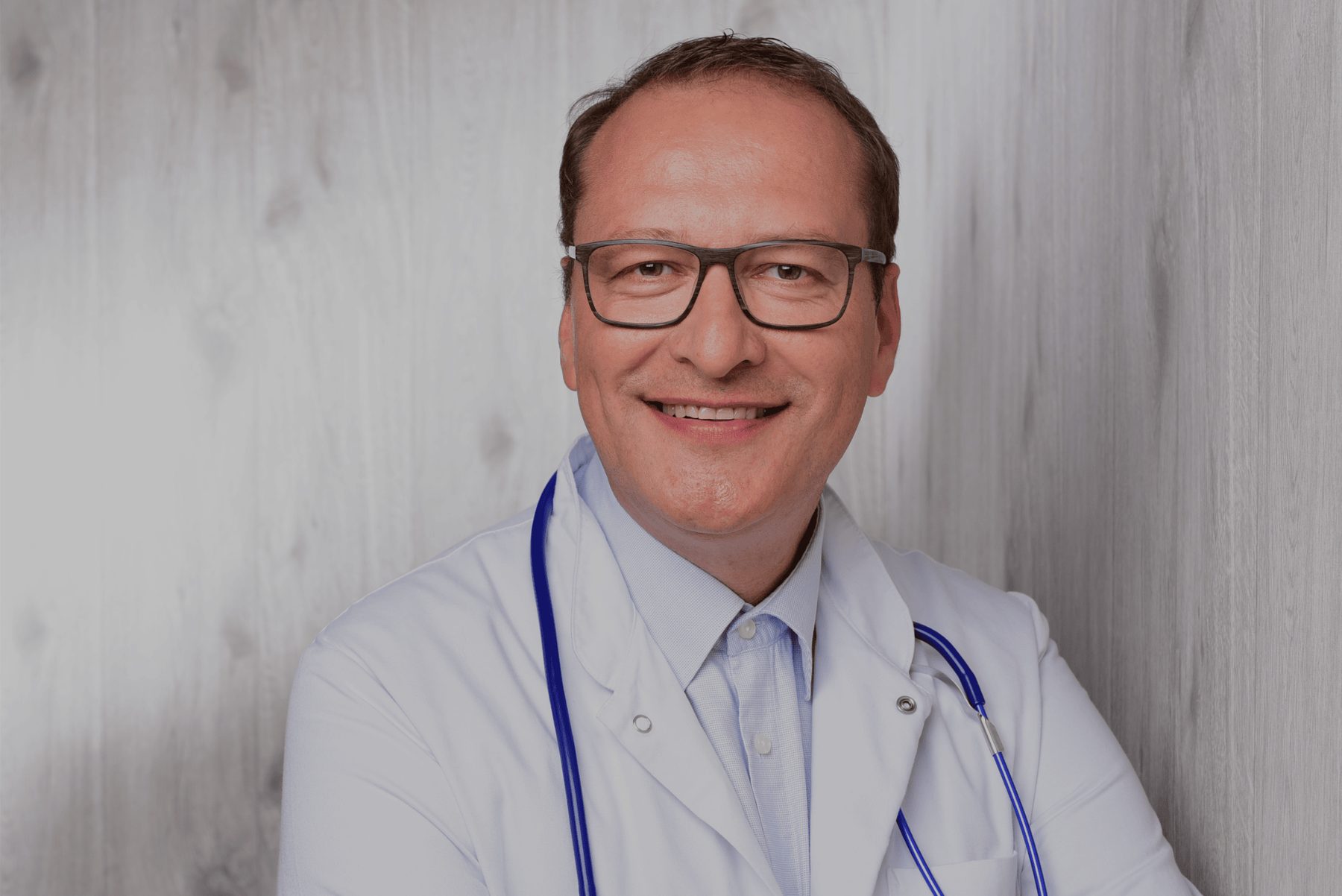
Dr. med. Johannes Link
Specialist in general surgery and vascular surgery · Senior Consultant, Vascular & Endovascular Surgery · Head of the outpatient wound clinic, Diakonie-Klinikum Stuttgart
Source and further reading: Link J: “Revaskularisationsmöglichkeiten beim Ulcus arteriosum – eine Übersicht”, Dermatologie Praxis 2022, Vol. 32, No. 6 (continuing medical education article).
This article is general information, not personalised medical advice. It does not replace an examination, diagnosis or treatment by a doctor. Never delay seeking medical help because of something you have read here.