Wound healing is a renovation project
The body heals wounds in three overlapping phases. Dr. Link likes to explain them with a picture that has stuck with many of his patients: the renovation of an old building.
“First the rubble has to be cleared away before new walls and floors can go in. The finishing touches come last: wallpapering, painting, furnishing.”
Dr. med. Johannes Link, interview in the health magazine Dr Fit (02/2021)In medical terms, the three phases are:
- Cleansing phase (exsudation): the wound weeps and cleans itself – the rubble is cleared away. This phase breaks tissue down.
- Granulation phase: new tissue and new small blood vessels form – the new walls and floors.
- Epithelialisation phase: new skin grows over the wound from the edges – the wallpapering at the end.
The transitions are fluid, and in larger wounds several phases can run at the same time. Each phase can be disrupted: the cleansing phase is prone to infection, the two rebuilding phases to excessive tissue and scar formation. When a phase stalls, the whole renovation stalls.
The wound is rarely the real problem
This is the key insight from decades of wound medicine: a chronic wound is usually not a local skin problem. It is the visible symptom of an underlying condition that keeps the renovation from progressing. The three most common ones:
- Diabetes mellitus – damaged nerves mean pressure points go unnoticed; damaged vessels mean wounds are poorly supplied.
- Peripheral arterial disease (PAD) – narrowed arteries deliver too little oxygen. The tissue cannot rebuild because supplies do not arrive.
- Chronic venous insufficiency (CVI) – the blood pools in the leg instead of flowing back. The permanent congestion keeps the wound wet and inflamed.
The practical consequence: if a wound has not healed after weeks, the most important question is not “which ointment next?” but “which underlying condition is holding it back – and is it being treated?” Identifying and treating that condition comes first. Everything else is built on top of it.
What good wound care looks like today
Wound medicine has changed fundamentally in recent years. The dry dressings of the past have largely given way to moist wound care: the wound should neither dry out nor sit in moisture. Modern dressings – foams, superabsorbers, fibre dressings, some with antimicrobial additives such as silver or medical-grade honey – absorb excess fluid, protect the wound and support each healing phase. A welcome side effect: painful daily dressing changes are, with few exceptions, no longer necessary.
The skin around the wound deserves attention too: it should be kept dry and cared for with rich, fatty creams, because it is the base from which new skin grows.
When the wound still stands still
Some wounds stagnate even under good care – often because the blood supply is exhausted. For exactly these situations, wound medicine has developed approaches that support healing independently of the vascular system. Dr. Link has published on one of them in the specialist press: light therapy.
Depending on the wavelength, medical light can stimulate the formation of new small vessels, support the cells’ energy supply, curb inflammation and act against certain bacteria. Alongside light and laser therapy, ozone and cold-plasma treatments are further modern options. None of them is a miracle cure – but in experienced hands they can extend the therapeutic toolbox precisely where standard care has reached its limit.
“Not every wound can be closed. Sometimes it already counts as a success when the wound does not grow.”
Dr. med. Johannes Link, Dr Fit (02/2021)That sentence is not resignation – it is honesty. When closure is not achievable, the goals shift: less pain, no infection, more quality of life. A good treatment team names these goals openly instead of promising quick miracles.
Healed does not mean finished: the scar
Even when a wound closes, what remains is not normal skin but scar tissue – in Dr. Link’s words, “a wound closure with limited dermatological competence”. Scar tissue usually has no sweat or sebaceous glands, so it cannot produce the body’s own protective cream, and it cannot protect itself against the sun. Scars therefore need lifelong care: regular moisturising and consistent sun protection.
When you should not wait
Have a wound assessed promptly by a doctor if:
- redness, swelling or warmth around the wound is increasing,
- pain suddenly becomes stronger or the wound starts to smell,
- dark or black tissue appears in the wound,
- you develop fever or feel increasingly unwell,
- you have diabetes or a known vascular condition and a new wound appears on the foot or lower leg.
A wound that will not heal – and no clear answers?
Dr. Link reviews your findings, explains in plain language what is holding the healing back and which questions to raise with your treating team. Independent, online, in German, English or French.
Book your free first call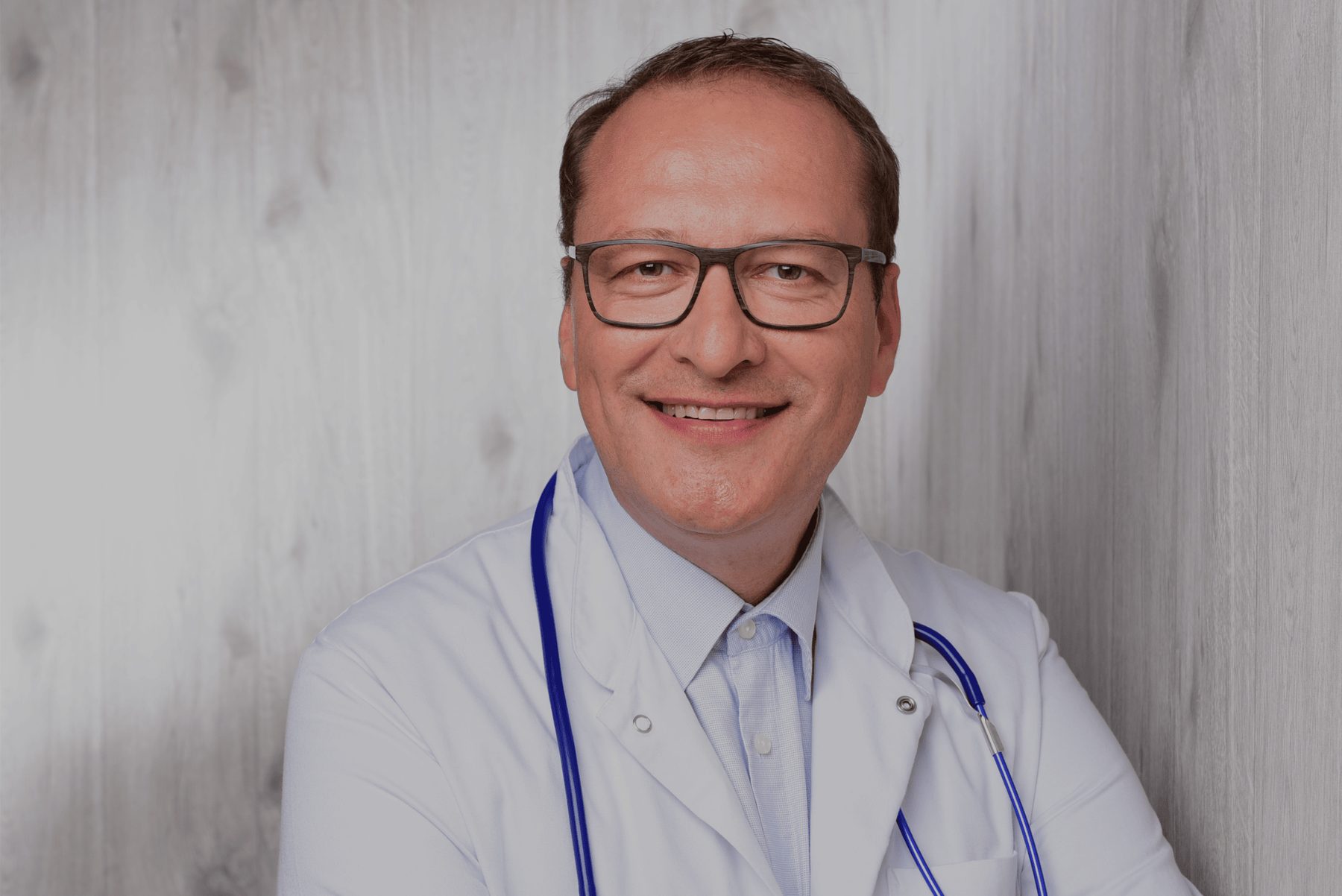
Dr. med. Johannes Link
Specialist in general surgery and vascular surgery · Senior Consultant, Vascular & Endovascular Surgery · Head of the outpatient wound clinic, Diakonie-Klinikum Stuttgart
Sources and further reading: Interview with Dr. med. Johannes Link, “Wunderwerk der Natur”, Dr Fit magazine 02/2021 · Link J: “Phototherapie bei chronischen Wunden – von den Grundlagen bis zur Anwendung”, Dermatologie Praxis 2023 · Link J: “Revaskularisationsmöglichkeiten beim Ulcus arteriosum”, Dermatologie Praxis 2022.
This article is general information, not personalised medical advice. It does not replace an examination, diagnosis or treatment by a doctor.